
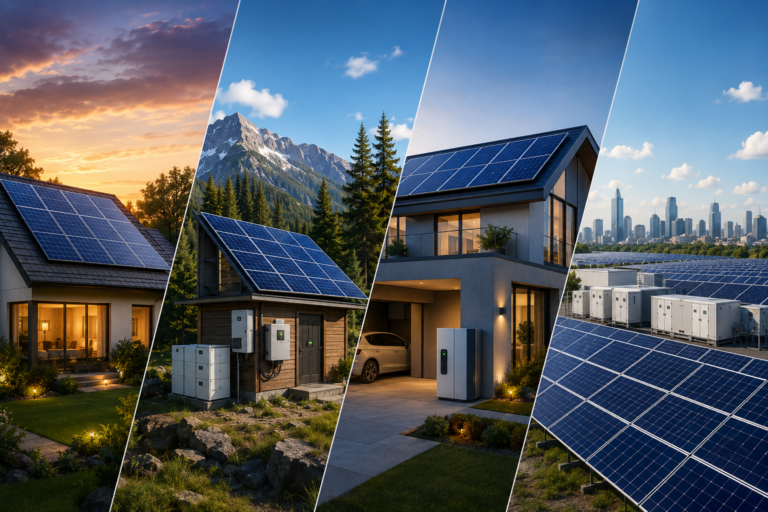
As businesses and homeowners continue shifting toward cleaner and more sustainable energy solutions, solar power has become one of the most practical long-term investments. However, before installing a solar energy system, understanding the different types of solar systems is essential.
Not all solar setups are designed the same way. Each type offers unique advantages depending on energy goals, location, utility access, and backup power requirements.
In this guide, we’ll explore the main types of solar systems, how they work, and which option may be the best fit for your energy needs.
What Is a Solar System?
A solar system is an energy solution that converts sunlight into usable electricity through solar panels. Depending on the configuration, excess power may be stored in batteries, exported to the grid, or used immediately.
The three primary types of solar systems are:
- Grid-Tied Solar System
- Off-Grid Solar System
- Hybrid Solar System
Understanding their differences can help maximize efficiency, reliability, and return on investment.
1. Grid-Tied Solar System
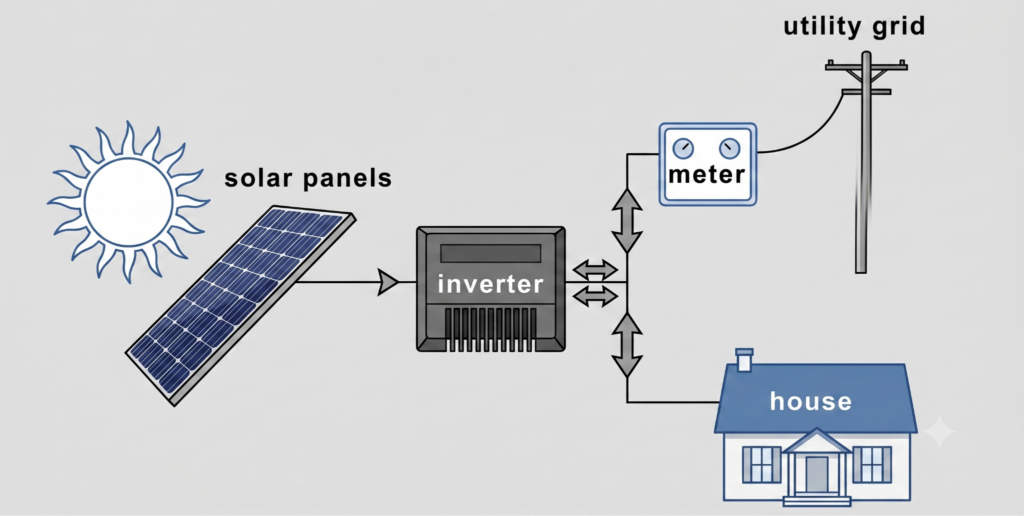
A grid-tied solar system (also called an on-grid solar system) is directly connected to the local utility grid.
During the day, solar panels generate electricity to power your property. If production exceeds demand, the excess energy can be sent back to the utility network depending on local regulations and available energy programs.
When solar production decreases—such as at night or during cloudy weather—the property automatically draws electricity from the grid.
Key Features:
✔ Connected to the utility grid
✔ No battery storage required
✔ Lower initial investment
✔ High efficiency for daily energy use
Best For:
- Residential properties
- Commercial buildings
- Users aiming to reduce electricity bills
Advantages:
- Lower installation and maintenance costs
- Efficient use of generated solar energy
- Minimal equipment requirements
Considerations:
- Limited power availability during grid outages unless backup solutions are integrated
2. Off-Grid Solar System
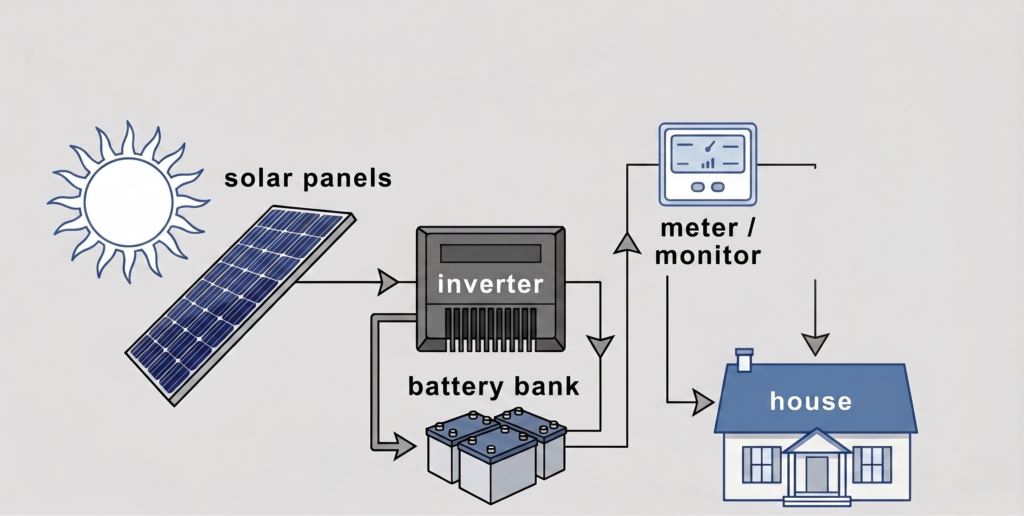
An off-grid solar system operates independently without relying on the utility grid.
This setup includes battery storage to retain excess solar energy for use during nighttime or periods of low sunlight.
Off-grid systems are commonly installed in remote areas where utility access is unavailable or unreliable.
Key Features:
✔ Completely independent from the grid
✔ Includes battery energy storage
✔ Designed for energy self-sufficiency
Best For:
- Remote properties
- Rural facilities
- Locations with unstable utility access
Advantages:
- Full energy independence
- Reliable operation in isolated areas
- Reduced dependence on utility providers
Considerations:
- Higher upfront costs due to battery requirements
- Requires careful system sizing and energy management
3. Hybrid Solar System
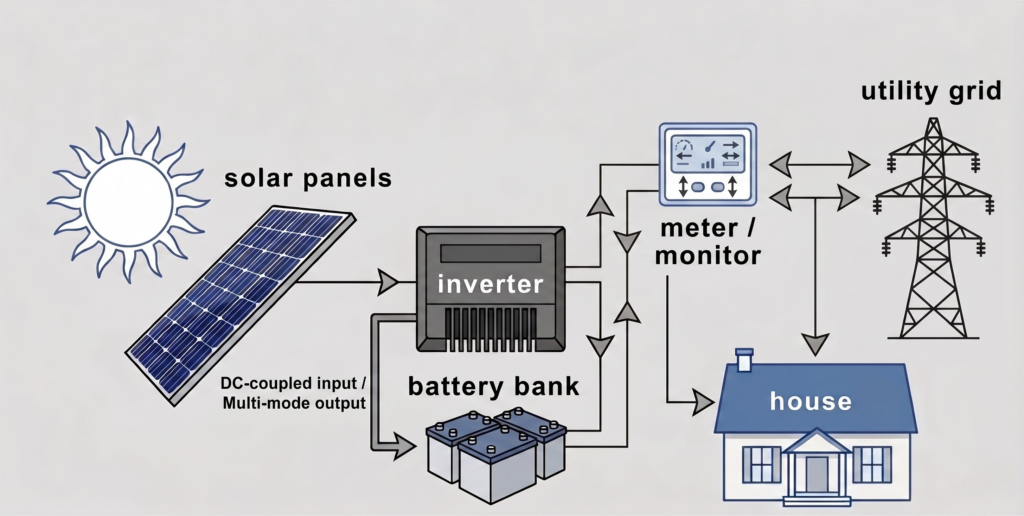
A hybrid solar system combines the benefits of both grid-tied and battery-based configurations.
This system allows solar-generated electricity to power the property, store excess energy in batteries, and utilize grid electricity when necessary.
Hybrid systems offer greater flexibility and improved energy reliability.
Key Features:
✔ Connected to the grid
✔ Includes battery storage
✔ Supports backup power capability
Best For:
- Homes requiring backup during outages
- Businesses seeking operational continuity
- Users prioritizing energy flexibility
Advantages:
- Improved energy resilience
- Better control over energy consumption
- Backup capability during power interruptions
Considerations:
- Higher installation cost compared to standard grid-tied systems
| Feature | Grid-Tied | Off-Grid | Hybrid |
| Utility Connection | Yes | No | Yes |
| Battery Storage | Optional | Required | Required |
| Backup During Outage | Limited | Yes | Yes |
| Initial Cost | Lower | Higher | Moderate–High |
| Energy Independence | Low | High | Moderate–High |
How to Choose the Right Solar System
Selecting the ideal solar system depends on several factors:
Energy Consumption
Evaluate your daily electricity usage and peak demand.
Location
Consider sunlight availability and utility accessibility.
Budget
Balance installation costs with expected long-term savings.
Backup Requirements
Determine whether uninterrupted power is necessary during outages.
Consulting with a qualified solar provider can help ensure proper system design and long-term performance.
Ready to find the right solar solution?
Contact our team today to explore a customized solar system designed for your property and energy goal