
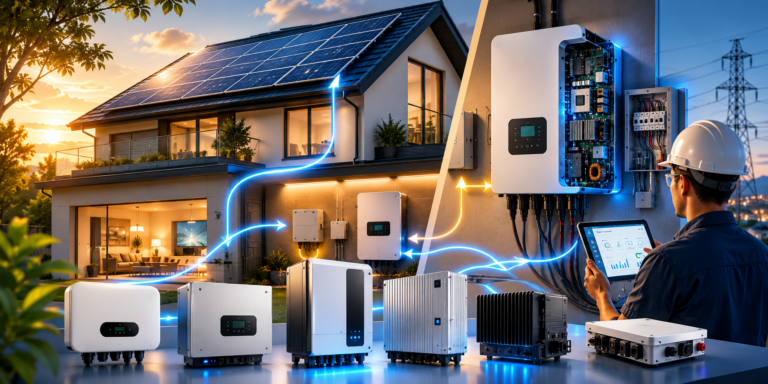
When planning a solar installation, solar panels often receive the most attention—but the solar inverter is equally important. Often referred to as the “brain” of a solar energy system, the inverter is responsible for converting the electricity generated by solar panels into usable power for homes and businesses.
Selecting the right inverter directly impacts system efficiency, performance, monitoring capability, and long-term energy savings.
In this guide, we’ll explore the different types of solar inverters, how they work, and how to determine which option best suits your solar power requirements.
What Is a Solar Inverter?
A solar inverter is a device that converts direct current (DC) electricity generated by solar panels into alternating current (AC) electricity used by most appliances and electrical systems.
Beyond power conversion, modern solar inverters may also support:
- System monitoring and diagnostics
- Energy optimization
- Battery integration
- Grid interaction and safety protection
Choosing the correct inverter configuration is essential for maximizing solar system performance.
1. String Inverter
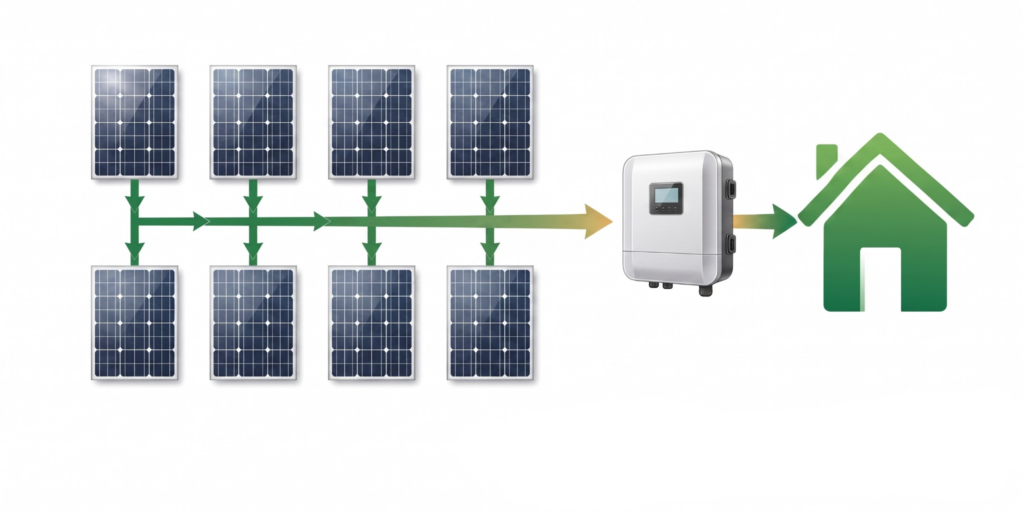
A string inverter is the most widely used type of solar inverter, especially in residential and commercial applications.
In this setup, multiple solar panels are connected together in a series (or “string”) and routed to a single inverter.
How It Works
Solar panels generate DC electricity, which is sent collectively to one central inverter for conversion into AC power.
Key Features:
✔ Cost-effective solution
✔ Simple installation and maintenance
✔ Suitable for uniform roof conditions
Best For:
- Residential solar systems
- Commercial rooftops
- Installations with minimal shading
Advantages:
- Lower upfront investment
- Proven and reliable technology
- Easy system management
Considerations:
- Performance may decrease if one panel experiences shading or reduced output
2. Microinverter
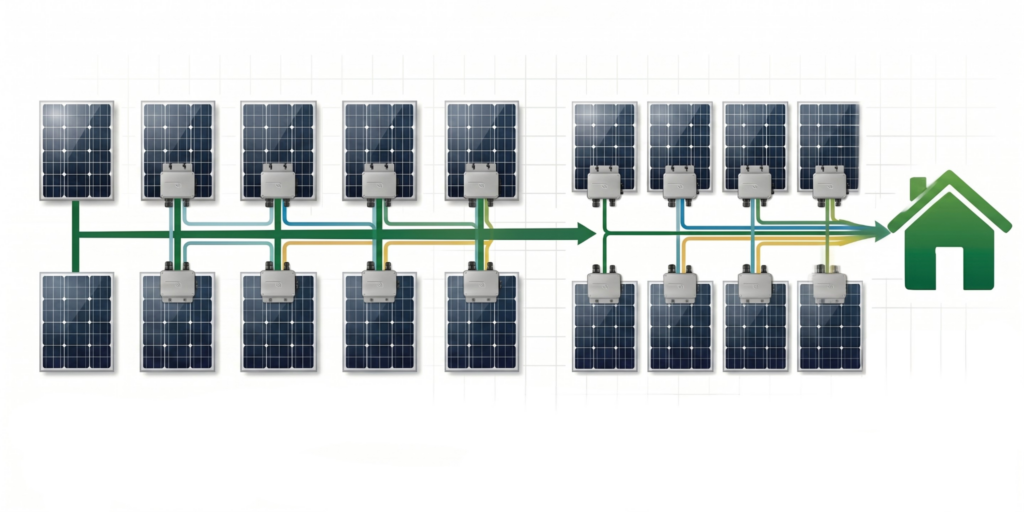
A microinverter is installed directly behind each individual solar panel.
Instead of converting power centrally, every panel operates independently and converts DC to AC at the panel level.
How It Works
Each panel produces and converts electricity individually before sending usable power into the property.
Key Features:
✔ Panel-level energy optimization
✔ Improved performance under shading
✔ Enhanced monitoring capabilities
Best For:
- Complex roof layouts
- Areas with partial shading
- Users seeking maximum panel visibility and performance
Advantages:
- Higher energy harvest
- Greater system flexibility
- Reduced impact from underperforming panels
Considerations:
- Higher initial investment compared to string inverters
3. Hybrid Inverter
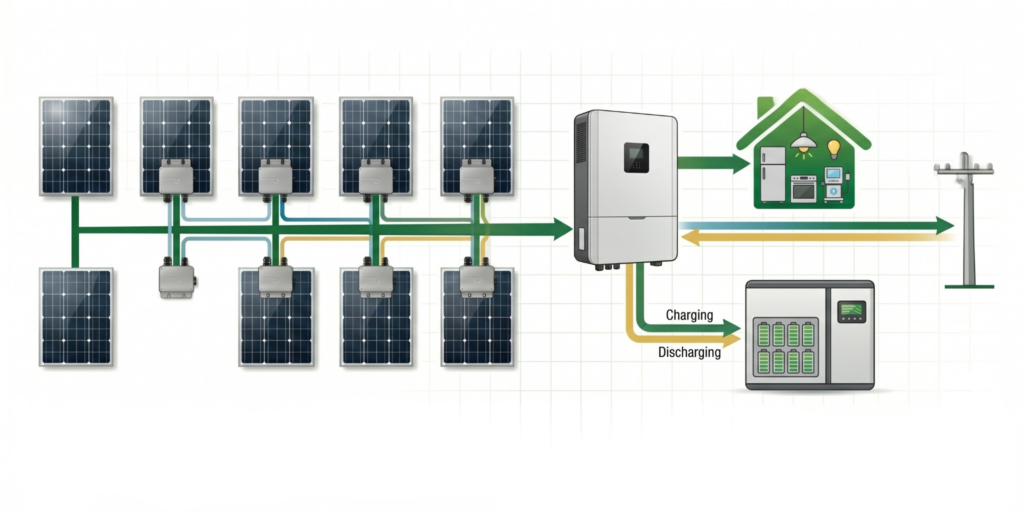
A hybrid inverter combines solar generation and battery management into a single solution.
It enables properties to use solar energy immediately, store excess electricity, and draw from batteries when needed.
How It Works
The inverter manages energy flow between solar panels, battery storage, and the utility grid.
Key Features:
✔ Supports battery integration
✔ Enables energy storage
✔ Backup power capability
Best For:
- Homes requiring backup energy
- Businesses seeking improved energy resilience
- Future-ready solar installations
Advantages:
- Better energy management
- Increased energy independence
- Simplified battery integration
Considerations:
- Higher equipment and installation costs
4. Central Inverter
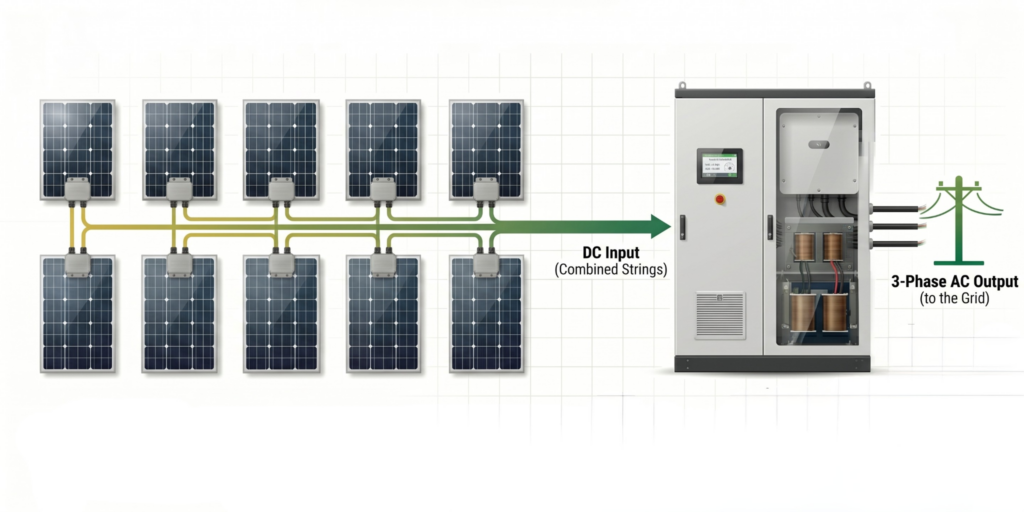
A central inverter operates similarly to a string inverter but on a significantly larger scale.
It combines multiple panel strings into a single high-capacity inverter.
How It Works
Large volumes of solar-generated electricity are processed centrally before distribution.
Key Features:
✔ Designed for large installations
✔ Centralized monitoring and operation
✔ Efficient for utility-scale projects
Best For:
- Large commercial facilities
- Industrial installations
- Solar farms
Advantages:
- Efficient for large-scale energy production
- Simplified infrastructure management
Considerations:
- Less flexible than distributed inverter systems
| Feature | String Inverter | Microinverter | Hybrid Inverter | Central Inverter |
| Installation Scale | Residential–Commercial | Residential | Residential–Commercial | Utility Scale |
| Battery Support | Limited | Optional | Yes | Limited |
| Shading Performance | Moderate | Excellent | Good | Moderate |
| Initial Cost | Lower | Higher | Moderate–High | Large-scale investment |
| Monitoring Capability | Standard | Advanced | Advanced | Centralized |
How to Choose the Right Solar Inverter
Selecting the right inverter depends on several factors:
Roof Design
Complex layouts and shading often benefit from microinverters.
Energy Goals
If backup power or energy storage is a priority, hybrid inverters may offer greater flexibility.
System Size
Larger projects may require centralized inverter solutions.
Budget Considerations
Balance upfront investment with long-term performance and energy optimization.
Working with experienced solar professionals can help ensure the inverter is properly matched to your system requirements.
Looking for the ideal inverter solution?
Connect with our team today and discover a solar setup engineered for efficiency, reliability, and long-term performance.